Closet AI Product Portfolio
CLOSET AIOverviewPersonaJourneyIdeationPrototypeUser storiesCanvas

Overview

Closet AI is a closet assistant. You photograph your clothes once and each item is tagged by category, color, and style with no manual entry. You tell it the occasion and the weather. It gives you a complete, ready to wear outfit.

Every recommendation comes from your own wardrobe. There are no shopping links and no outside suggestions. That constraint is the product.
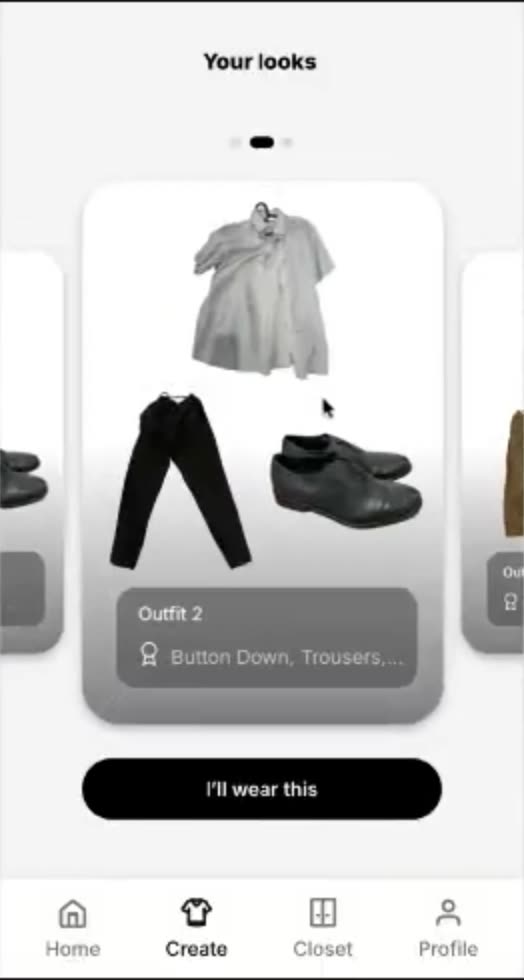
Closet AI outfit result: a shirt, trousers, and shoes from the user's own closet, with an I'll wear this button
My contributionProduct Manager. Owned two features end to end: Authentication and Occasion Selection. Wrote both PRDs, the wireframes, and the real device QA definition of done. Also run go to market and the waitlist.
People18 people. I led it along with 3 other PMs, with two designers led by Sage Park, and twelve engineers and data scientists led by Farah Bakhtiar Huda, Syed Kamil Taqi Zaidi, and Muhammad Essa.
AchievementPresented with a live demo at Demo Day. Working product on a retrieval pipeline, with the waitlist open ahead of launch.
Project start date, the Demo Day date, and the current waitlist count. Also confirm you are fine naming teammates here.

Customer's Challenge

Our target customer is a young working professional who owns plenty of clothes they like and still freezes in front of the closet before a date, a happy hour, or a family dinner. It happens two or three times a week, and it usually ends with the same three shirts or a text to a friend.

It's not that I don't know what looks good. I just have too many options.

Customer interview, 500-item closet

The biggest thing we learned: the problem is not taste. It is choice overload. Friction scales with closet size and variety, so the more you own, the harder the decision gets. That makes it a decision relief problem, not a styling problem.

What did we ask?

We also read what people say about the apps already in this space. Two complaints repeat. Setup means photographing a hundred items before anything useful happens. And the suggestions feel random, or ignore half the closet.

The question list is my reconstruction. Swap in the real interview guide, the number of interviews, and one or two more quotes in the speaker's own words.
Problems
Solutions
More clothes make the decision harder
One complete outfit, ready to wear
Suggestions ignore the occasion
Occasion, date, weather, and setting as inputs
Apps push you to buy more
Built only from clothes you own
Cataloging takes a weekend
Snap a photo, tags fill in themselves
AI invents items you do not have
Every piece checked against your closet

Persona

Young Working Professionals like Ken

Ken Ken25 · San Francisco RoleB2B Sales ScheduleHybrid, in office 3 days a week Closet size40+ pieces, mostly worn on repeat Re-decision moments2 to 3x per week
7:40 PM, TUESDAY

Ken matched with someone on Hinge. Tonight is the first date, in an hour. He owns more than 40 pieces he actually likes, but keeps reaching for the same three shirts.

He tries on three outfits, can't tell if any of them reads “trying but not too hard,” and ends up texting a friend for a second opinion. Again.

This isn't a one-off. It's dates, happy hours, his cousin's engagement dinner: never a big shopping trip, always a small, stressful re-decision.

The Closet Shopper (wear what you own)

Closet shoppers have decided to stop buying and start wearing. This is the first segment in our go to market plan, because they already gather in no-buy and capsule wardrobe communities.

Maya T.The Closet Shopper
Stock portrait for the persona Maya T.

Age: 29Work: Marketing associateCloset: 150+ pieces, many thriftedLocation: Washington, DC

Personality

Buys newWears what she owns
Keeps it privatePosts about it
Wants polishTolerates rough betas

Bio

Halfway through a no-buy year. Has tried two wardrobe apps and quit both during setup. She is motivated by the outcome and will forgive a rough edge if the outfits are good.

Goals

  • Wear the pieces she forgot she had
  • Get through the year without shopping
  • Share outfits with her community

Frustrations

  • Photographing 100 items before anything works
  • Pairings that feel random
  • Apps that skip half her closet

How persona discovers the product

Reddit threads, capsule wardrobe creators, Pinterest outfit grids.

How persona uses the product

Joins the waitlist, uploads in batches, and asks for outfits around pieces she has not worn in months.

Motivations

Uses the whole closet
No shopping push
Fast setup
Something to share
Ken is exactly as he appears in the Demo Day deck. Maya is a draft built from the go to market plan. Redraw her from the interviews, or remove her if you want Ken to stand alone.

Customer Journey

Ken's Journey Map

Phases
Trigger
Sign up
Upload closet
Pick occasion
Confirm details
Get outfit
Rate
Thoughts and feelings
"Date in an hour and I am staring at a full closet."
"Just let me in."
"Do I really have to do every item?"
"First date. That is an option. Good."
"It already knows it is cold out."
"I forgot I owned that jacket."
"That worked. I would wear it again."
Emotional experience
User actions
Tries three outfits. Texts a friend
Signs in with Google in one tap
Photographs items. Checks the tags
Picks the occasion type
Confirms date, weather, activity, and setting
Reviews the outfit and gets dressed
Rates the outfit after wearing it
Touchpoints
Short video, friend, waitlist page
Sign in screen, session kept on device
Camera, auto tagging, tag review
Occasion picker
Date, temperature, weather chips, review screen
Generating screen, outfit result
Feedback and rating prompt
Pain points
Too many options, no time
Another password to remember
Cataloging is where every app loses people
Occasions that do not fit a fixed list
Typing in what the app could look up
Outfits that ignore the weather or the closet
Feedback that changes nothing
User Stories

As someone with plenty of clothes and an event in an hour, I want one complete outfit from what I already own, so that I can stop second guessing and leave on time.

Define

Ken does not need to be taught style. He needs the decision made smaller. He will not catalog for a weekend, and he will not trust an outfit that includes something he does not own. With that in mind, we framed the problem as two How Might We statements.

How Might We?
Too many options
Show one outfit, not ten
Complete looks only
Explain why it works
Surface forgotten pieces
Let them regenerate
Setup is a chore
Auto tag from the photo
Category, color, formality
Let users correct tags
One tap sign in
Stay signed in
Outfits miss the moment
Occasion taxonomy
Date on every occasion
Temperature and weather
Activity level
Indoor, outdoor, mixed
Warmth beats activity beats style
Can I trust the AI
Only items in the closet
Validate every piece
Location only if they ask
Rating after wearing
Delete account and data

Ideation

We went wide first, then grouped the ideas and picked what belonged in the first build. Anything that pointed the user toward buying something was cut early, because it breaks the one promise the product makes.

Ways to recommend
Outfit from your own closet
Shopping suggestions
Human stylist chat
Daily outfit calendar
Friends vote on looks
Capsule wardrobe builder
Getting the closet in
Photo with auto tagging
Manual entry form
Import from receipts
Bulk video scan
User confirms tags
Understanding the occasion
Structured occasion flow
Free text prompt
Calendar sync
Weather chips and temperature
Opt in location weather
Schedule future events
Getting better over time
Feedback and rating loop
Wear tracking
Cost per wear
Style quiz
Shared closets
Selected Ideas for Early Concept
Outfits only from clothes you own
Photo upload with auto tagging
Structured occasion, date, and weather
Feedback and rating loop
Every item validated against the closet
Simple sign in that sticks
1Photograph your closetSnap a photo of each item. It is tagged by category, color, and formality. No manual entry.
2Tell it the occasionClient meeting, date night, a snow day. Whatever you are dressing for, plus the weather.
3Get a ready outfitA complete, coherent outfit built only from clothes you own.
I rebuilt these boards from the PRDs and the feature decisions. If the team has real FigJam or Miro boards, screenshots of those are stronger. Forward date scheduling is shown as an idea only, since it is specced but not built.

Prototype and User Testing

The product works end to end. Here is one full run, from first open to a rated outfit.

  1. Onboarding: four cards explain scan, occasion, outfit, and rating.
  2. Sign in with email and password or Google.
  3. Add a clothing photo. The app analyzes it and fills in category, color, and style.
  4. Review the tags, fix anything, and save it to the closet.
  5. Pick what you are dressing for, then set how warm or cool it feels.
  6. Get outfits built from the closet and tap "I'll wear this".
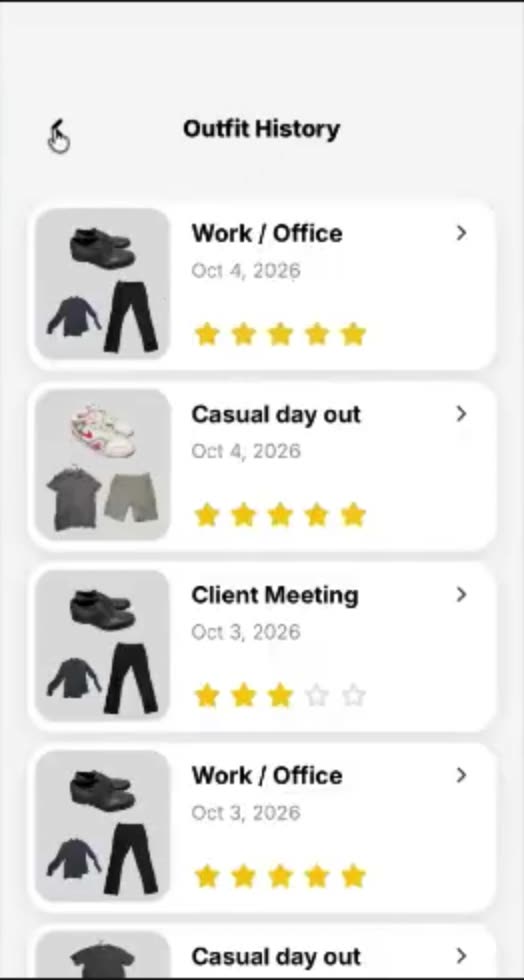
  7. Rate the outfit. It lands in Outfit History with its stars.
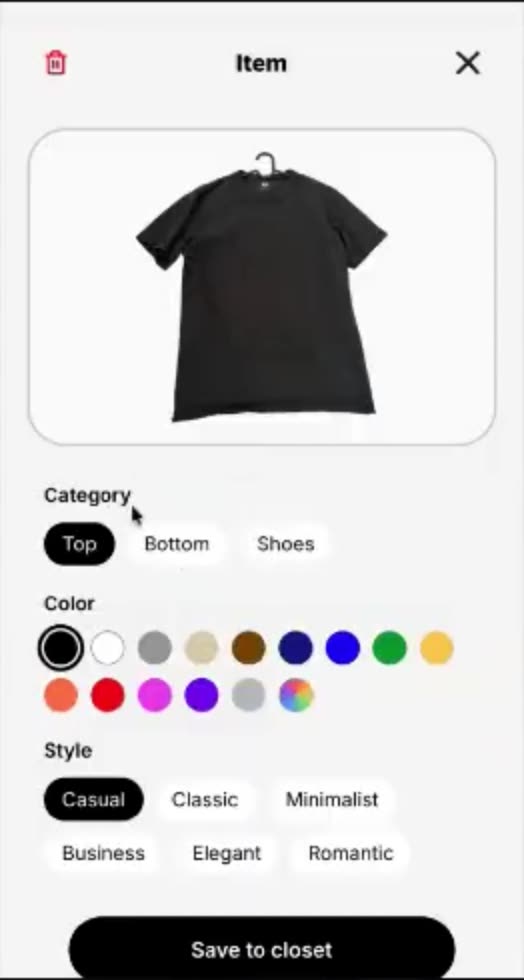
TagItem screen with a black t-shirt and its category, color, and style tagsOne photo in. Category, color, and style come back filled, and you can correct them.
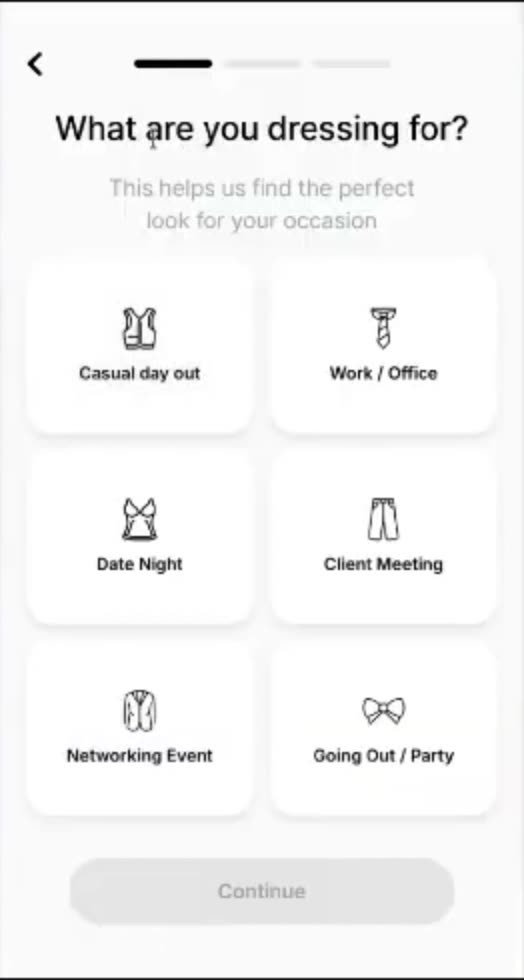
Pick the occasionWhat are you dressing for, with six occasion tilesSix occasions, from a casual day out to a client meeting.
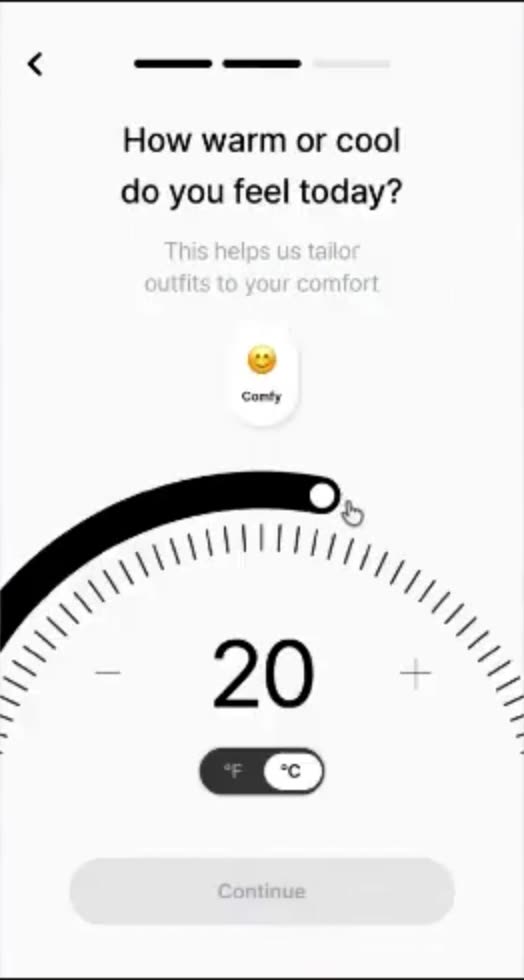
Set the temperatureTemperature dial reading 20 with a Fahrenheit and Celsius toggleA dial for how warm or cool it feels, in Fahrenheit or Celsius.
Get the outfitYour looks screen with a shirt, trousers, and shoesComplete looks from your own closet. Swipe between them and commit to one.

Rate itHow did we do on Outfit 1, with a five star ratingA quick star rating after you choose.
Look backOutfit History list with occasions, dates, and star ratingsEvery outfit is saved with its occasion, date, and rating.
18people across product, design, and engineering
2features I owned end to end
6occasion types in the picker
3steps from closet photo to outfit

System Architecture

What testing changed

Once people are using it, add time to first outfit, week 2 return rate, and what testers said.

User Stories and Acceptance Criteria

Occasion Selection
O
As a user getting dressed for an event, I want to pick the kind of occasion, so that the outfit fits where I am going.
The app should offer a fixed occasion taxonomy and require one choice before continuing. The setting should default from the occasion type.
D
As a user, I want every occasion tied to a day, so that the outfit and the rating prompt match a real event.
The date should be required and default to today. Past dates should be blocked.
W
As a user, I want to give the weather quickly, so that I am not cold or overdressed.
The app should take a temperature in Fahrenheit or Celsius and reject out of range values inline. Conditions should be one of Clear, Cloudy, Rain, Snow, or Windy.
L
As a user, I want weather filled in from my location only when I ask, so that I stay in control of my data.
Location should be read only after the user taps "Use my location". Nothing should be pre-filled without that tap.
A
As a user, I want the outfit to match what I will be doing, so that I can move comfortably.
The app should offer Standing or Mingling, Seated, Active or Moving, and Exercise. When signals conflict, warmth beats activity and activity beats style.
Authentication
G
As a new user, I want to sign in with an account I already have, so that I can start without another password.
The app should support Google sign in and email with password. A first sign in should land on closet setup.
S
As a returning user, I want to stay signed in, so that I get to an outfit quickly.
The session should persist across visits and refresh without asking the user to sign in again.
R
As a user who forgot my password, I want to reset it, so that I do not lose my closet.
A reset link should be sent to the account email and the old password should stop working after reset.
X
As a user, I want to delete my account, so that my photos and data are removed.
Deletion should start a 30 day window, after which the account and its data are removed.
Outfit Quality
C
As a user, I want every piece in the outfit to be mine, so that I can wear it tonight.
Every recommended item should be validated against the user's closet. No shopping links and no outside items.

Risks and Remediations

Product Risk: users stall while cataloging, the same point where every wardrobe app loses people.
Auto tagging from one photo, with no manual entry. Hold marketing on the fast setup promise until the product clears it.
Technical Risk: strict matching rules return no outfit for small closets.
Rules relaxed so the model can always generate at least one outfit.
Technical Risk: the model recommends an item the user does not own.
Grounded validation and anti-hallucination guardrails check every piece against the closet.
Operational Risk: the AI provider fails mid request, or costs run away.
Retry logic on every call, plus a rate limit on model calls.
Scope Risk: Occasion Selection grew over several rounds into a larger feature than planned.
Forward date scheduling moved to its own PRD and is not in the current build.
Business Risk: an established app ships better AI styling.
The edge is setup speed and the segment we serve first, not the model.

Pricing Strategy

Now
  • Pre-launch. The waitlist is free and so is the closed beta.
  • The first 100 beta users come from the most active waitlist members.
What decides the price
  • Week 2 return rate: people who upload their closet and come back.
  • Cost per outfit generated, since every recommendation is a model call.
Target
  • 90 day plan: 1,500 waitlist signups and 100 active beta users. These are goals, not results.
No price has been set. Add the model you are leaning toward (free tier, subscription, or both) and one or two competitor price points for reference.

Lean Business Model Canvas

Problem StatementHow might we turn a full closet into one confident outfit for the occasion, in under a minute?
Solution
  • Photo upload with auto tagging
  • Structured occasion and weather
  • Complete outfits from owned clothes
  • Feedback and rating loop
Value PropositionOutfits from the clothes you already own, ready in the time it takes to say where you are going.
Unfair Advantage
  • Retrieval over the whole closet
  • Every item validated as owned
  • Occasion inputs most apps skip
Customer SegmentsYoung working professionals with recurring re-decision moments. People committed to wearing what they own.
Existing Alternatives
  • Wardrobe apps: Whering, Indyx, Acloset, Cladwell, Stylebook
  • Texting a friend
  • The same three shirts
Key Metrics
  • Time to first outfit
  • Week 2 return rate
  • Outfit rating
  • Activated waitlist members
High-level Concept
  • Closet AI = the friend you text for a second opinion, who knows your whole closet
Channels
  • Short form video
  • Reddit and Pinterest
  • Build in public on LinkedIn
  • Waitlist with referrals
Early Adopters
  • Waitlist members
  • No-buy and capsule wardrobe communities
  • People who quit other wardrobe apps
Cost StructureModel calls for tagging, embeddings, and outfit generation. Hosting on Vercel. PostgreSQL and file storage on Cloudflare R2. Authentication. People across product, design, and engineering.
Revenue Streams (Pricing Model)Not set. Free through waitlist and closed beta. Pricing follows the week 2 return rate.

Sources

Target customer, interview quote, product steps, system architecture, challenges, and team: Closet AI Demo Day deck. Feature rules: Authentication and Occasion Selection PRDs. Segments, channels, competitor complaints, and targets: Closet AI go to market plan, September 2026.